From Jean's desk, it's Monday Mojo. Inside SIP Scootershop, where two teenage Vespa fans built a 110 person business without ever setting a revenue target.
Last week I promised you the second half of our trip to Bavaria. Here it is.
“Nobody needs these parts.”
Alex Barth said that to us in the showroom at SIP Scootershop in Landsberg am Lech, surrounded by helmets, exhausts and a Vespa painted in metal flake. He wasn't complaining. He was explaining why the business works.
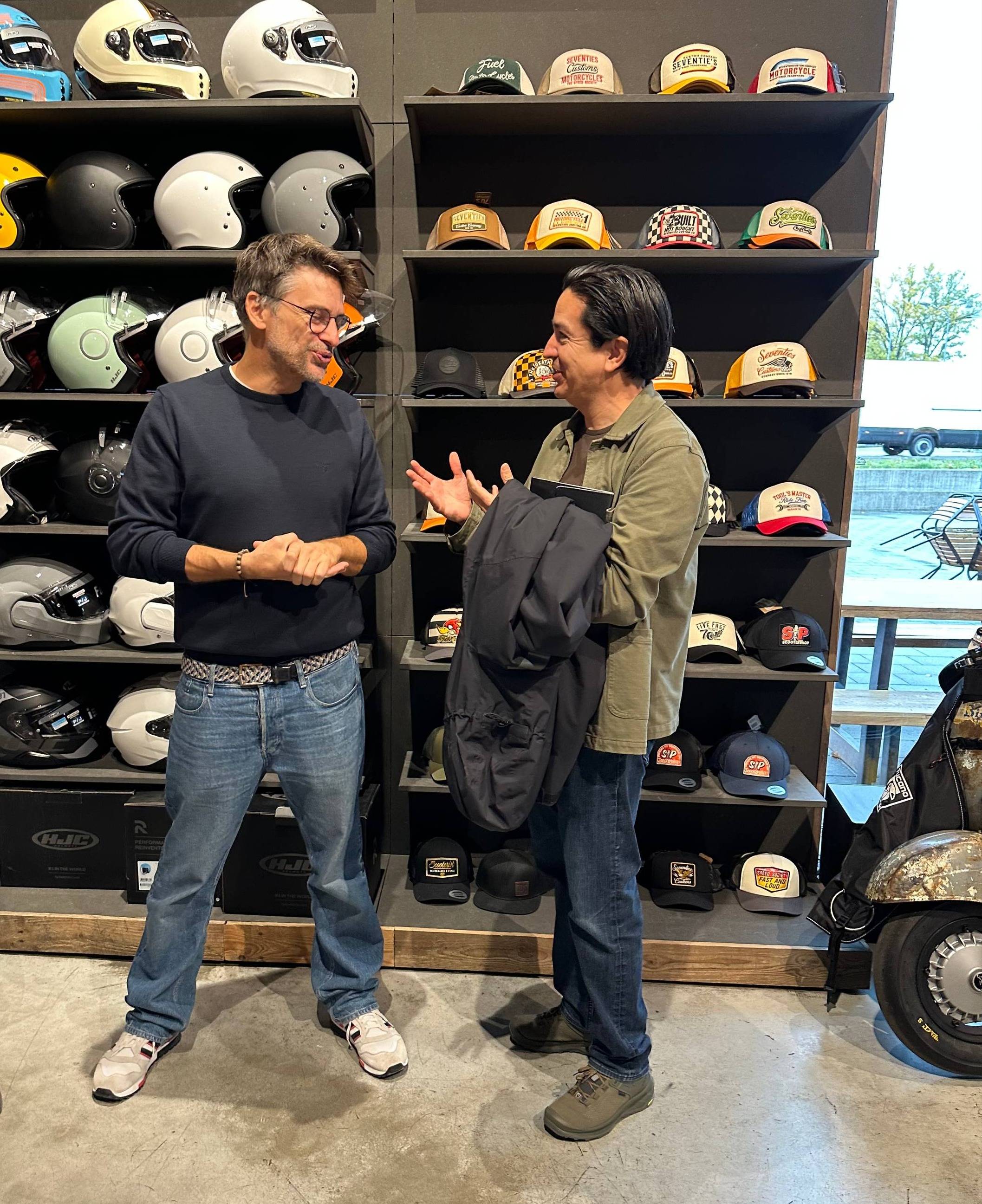
“It's a luxury,” he said. “You can buy a motorbike or a car. I think that's why it's a success. Because we don't need it.”
SIP sells parts and accessories for Vespas to riders all over the world. It has 110 people, more than thirty years behind it, and two founders who still run it together. Ralf Jodl looks after marketing. Alex is the engineer, looking after development, software and logistics.
“The more boring thing is my job,” he told us, “and the more colorful things are his.”
One sells the dream. The other makes sure the part arrives. That split turns out to be the whole story.
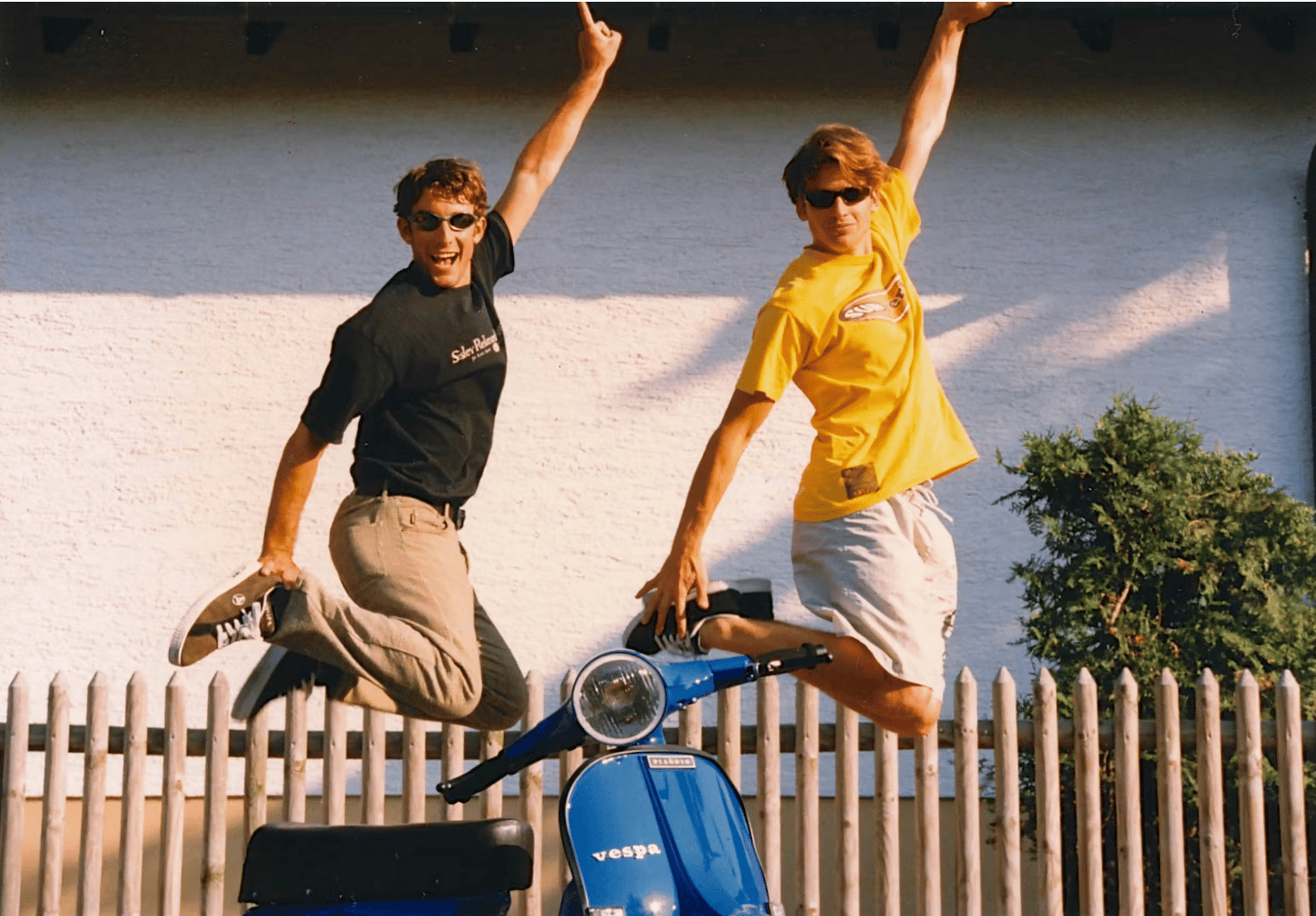
Alex and Ralf were sixteen when they started riding Vespas, and Vespas were slow. Slow was boring. So they tuned the engines, then started swapping parts to look cooler than the next guy in the school parking lot.
The good parts came from England and took months to arrive. Friends started asking them to order for them too. At eighteen they rode to Italy, broke down along the way, and spent every cent of pocket money on repairs. They needed a way to pay for the hobby.
“So that was the business plan.”
They made it official in 1994, while still at university. They were in a small town in Bavaria, and nobody was going to drive there for Vespa parts, so from the very first day SIP had to go to the customer. That meant mail order.
By 1996 they’d moved into a few small rented rooms in Landsberg’s old army barracks. Down the hall was a group of young guys who were playing around with something new called the internet. Alex and Ralf’s first reaction was, “Internet, what is this?” But those neighbors had a passion for it, and passion was something Alex and Ralf understood. So they thought, why not?
SIP had its first webpage in 1997. A year later they had a proper web shop, modeled on Apple’s online store, which was about as cutting edge as it got back then. Alex is the first to say none of it was planned. They were simply in the right building with the right people. While the English shops they used to order from were still taking months to ship, two students in an old barracks were already selling online.
When I asked about plans, Alex laughed. In over thirty years they've never set a revenue target. When the bank asks for a plan, they write one, knowing something will come along and they'll end up tearing it up.
“The plan is not worth the paper you write it on.”
What they tell their people instead is to do the job with passion, do it well, and trust that the success will follow. “We sell the dreams,” he said.
It helps that they picked a niche inside a niche: classic Vespas, inside scooters, inside two wheelers. The big dealers stay away because it takes too much specialist knowledge. SIP works with 650 suppliers, including an old man in Genoa who still writes his invoices by hand. When Piaggio stops making a part for a sixty year old model, SIP will often make it themselves, even if only a few hundred riders worldwide need it. Not every part has to pay back. Keeping someone's grandfather's Vespa on the road is a story that comes back to you.
This is Ralf's half, and they don't do it quietly...
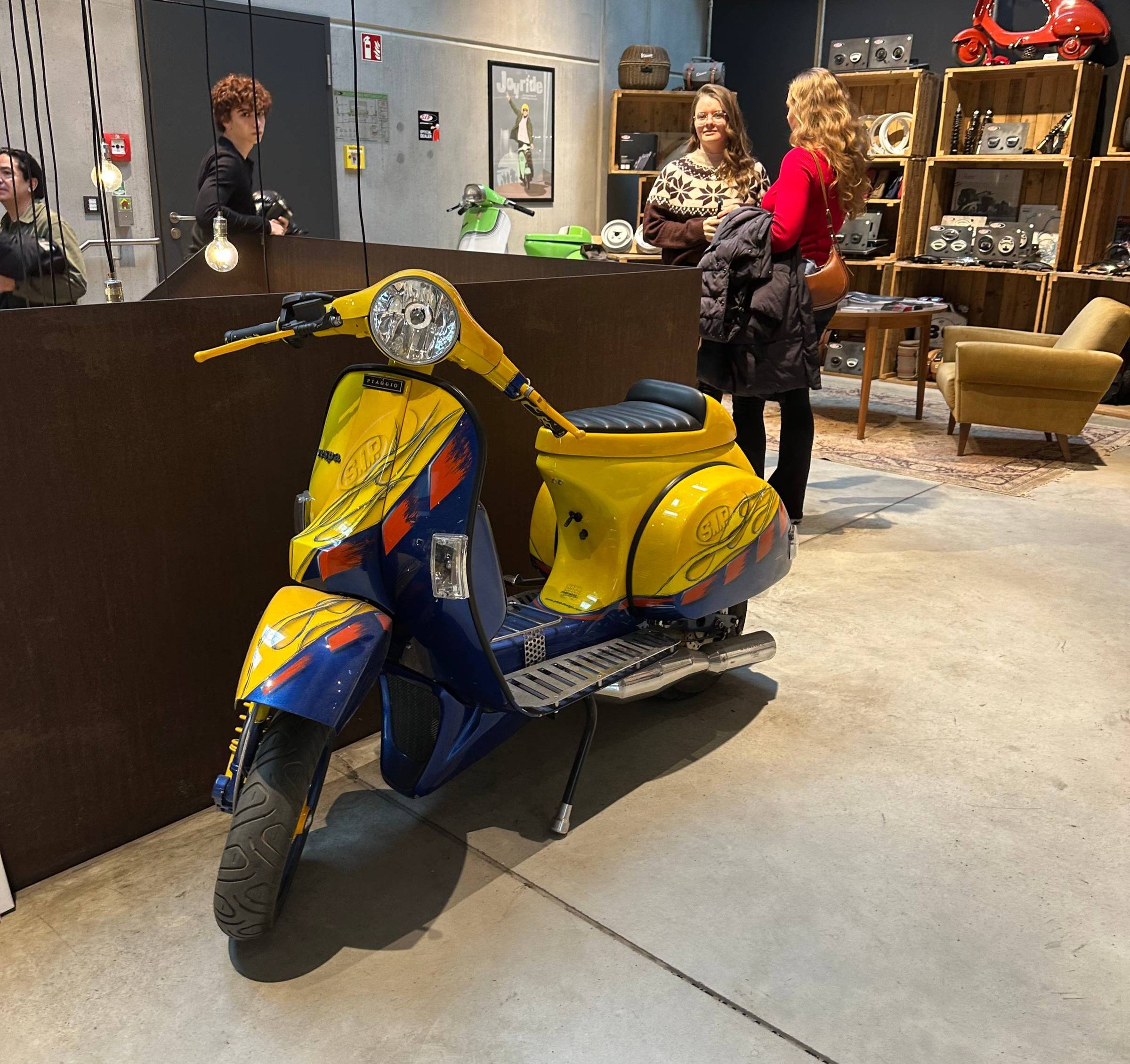
In the corner of the showroom sits a Vespa they built for an anniversary. A standard one puts out about six horsepower. This one delivers eighty! They raced it, which you never do with a show bike. Everything breaks. People called them crazy. Then they shared it online, and even more people called them crazy all over again.
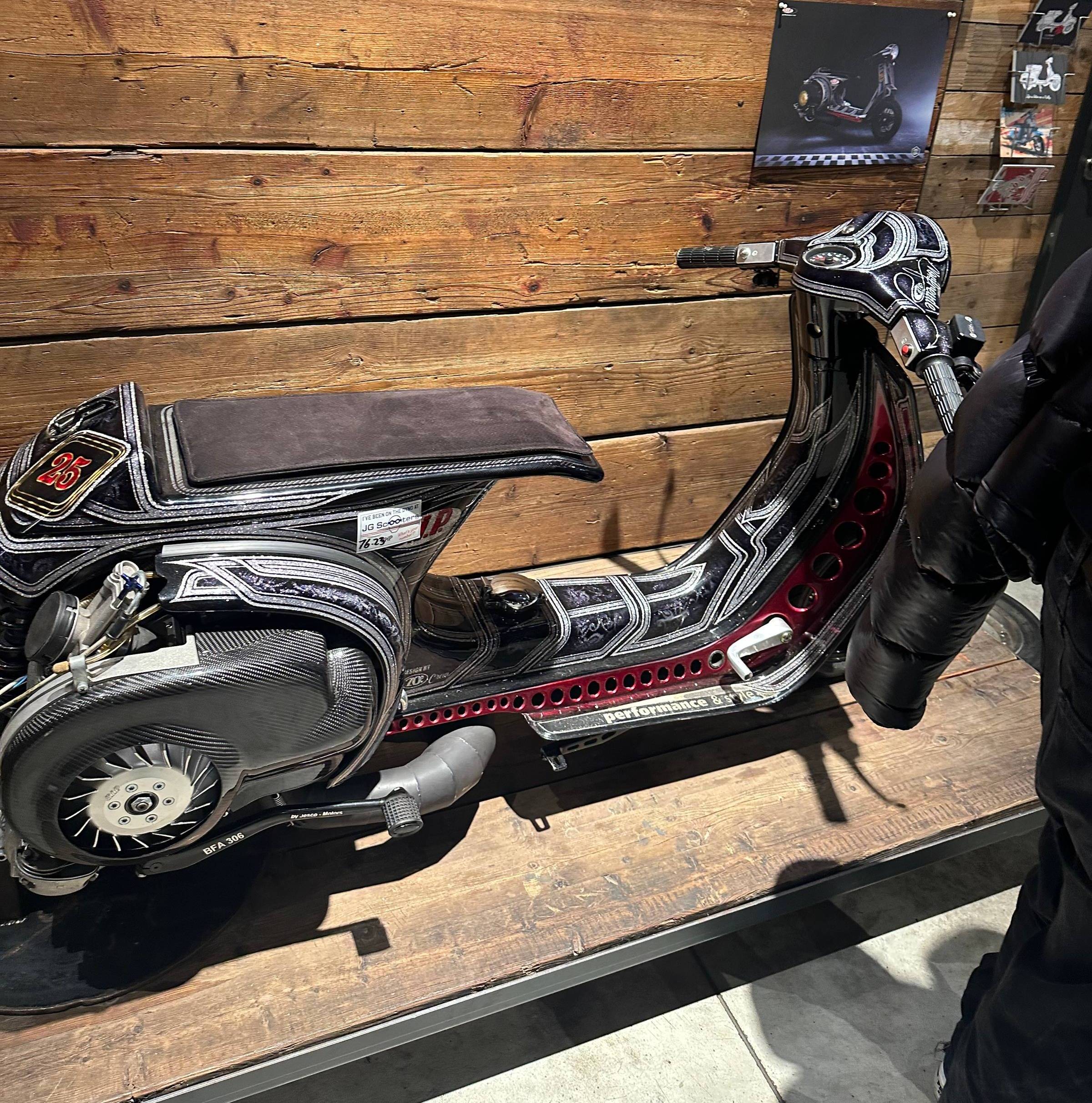
That was the whole point. Almost nobody who saw that bike will ever want eighty horsepower. But Alex says they all think the same thing: if these guys can build that, maybe I can buy a mirror from them. Or a tire. Or everything. And if eighty is possible, maybe ten or fifteen isn’t such a crazy idea for my own scooter. The bike was never really the product. The story was. It gives people a feeling, an appetite, a reason to believe their own idea is possible.
So they keep telling stories. They have their own studio and their own content team. They’ve raced Vespas on a motocross track, which makes no sense at all. That’s the point.
“It's nice for the 1,000 people coming here. But for the tens of thousands watching for months and years on social media, it's perfect.”
Out the back there's a little amphitheater and an Italian bar, where riders heading south stop for a Spritz and stay for hours, looking at each other's scooters and talking themselves into the next part.
Underneath it all is something simple. Nobody really needs a new exhaust. People buy one because SIP makes them want the life that goes with it: a stressful week, then into the garage, a beer in hand, and a Vespa to tinker with.
Ride an old Vespa through Padua (or anywhere else in Italy) and you won’t get far. Alex says that fifty strangers will stop you, and every one of them has a story. The Vespa they rode to school. The summer they took their girlfriend to the coast on the back of one. The one their father kept in the garage. My friend Francesca shared her Vespa story: I had my first accident at 14. I was staring at the boys.
Alex compared it to driving an old Ferrari. In Italy people wave. In Germany, he joked, they mutter that you must have too much money. Nobody is ever jealous of a Vespa. Everybody smiles.
That’s what SIP is really selling. Not parts. A little piece of that feeling.
Here’s what most visionaries miss. The dream only works if the boring half is excellent. You can’t make someone fall in love with a part and then make them wait three months for it. That was the very problem that started SIP.
And the bar keeps rising. In Germany, Amazon has set the tone. Order today, have it tomorrow. SIP isn’t Amazon, but its customers expect the same, and Alex says if you can satisfy German customers, you can satisfy anyone. Most of SIP’s business still runs through its own web shop, so meeting that standard falls on Alex and his team.
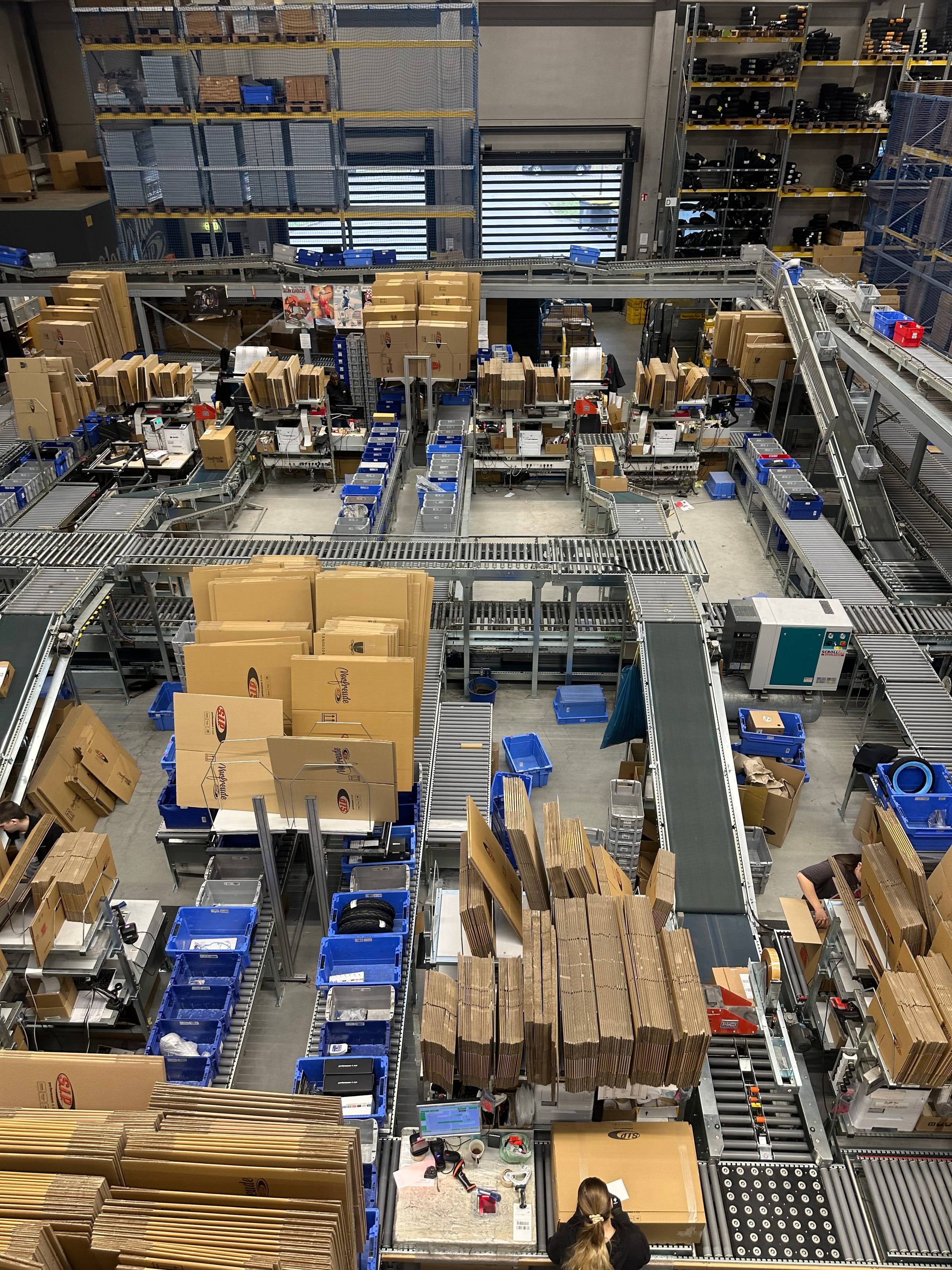
So Alex never stops optimizing. Where others see stock as a cost, he sees it as the reason customers come back: no stock, no sales. But stock only works if it’s the right stock in the right place, so his team works on the product data every day. That data is how they know what to reorder and where to put it. It’s also how a rider in Australia knows a part will fit before paying to ship it across the world.
In summer, when the riding season doubles the orders, every step gets looked at again: how parts are picked, how they’re packed, how far someone walks between shelves. When Alex spends time on the warehouse floor, he comes back with a list.
“Why do you do this?” “Because we’ve always done it.”
That answer is his cue to make a change.
All that optimizing has bought them space. Years ago they bought the ground next door, under a local rule that says you have to build on it. Three times they’ve pushed the deadline back, because Alex kept finding ways to make the existing building do more. He’d rather spend forty hours turning the stock faster than pour concrete. Now the local authorities have run out of patience, and they have to build. He’s honest that a push isn’t always a bad thing.
“If you don't have to react, you don't do it.”
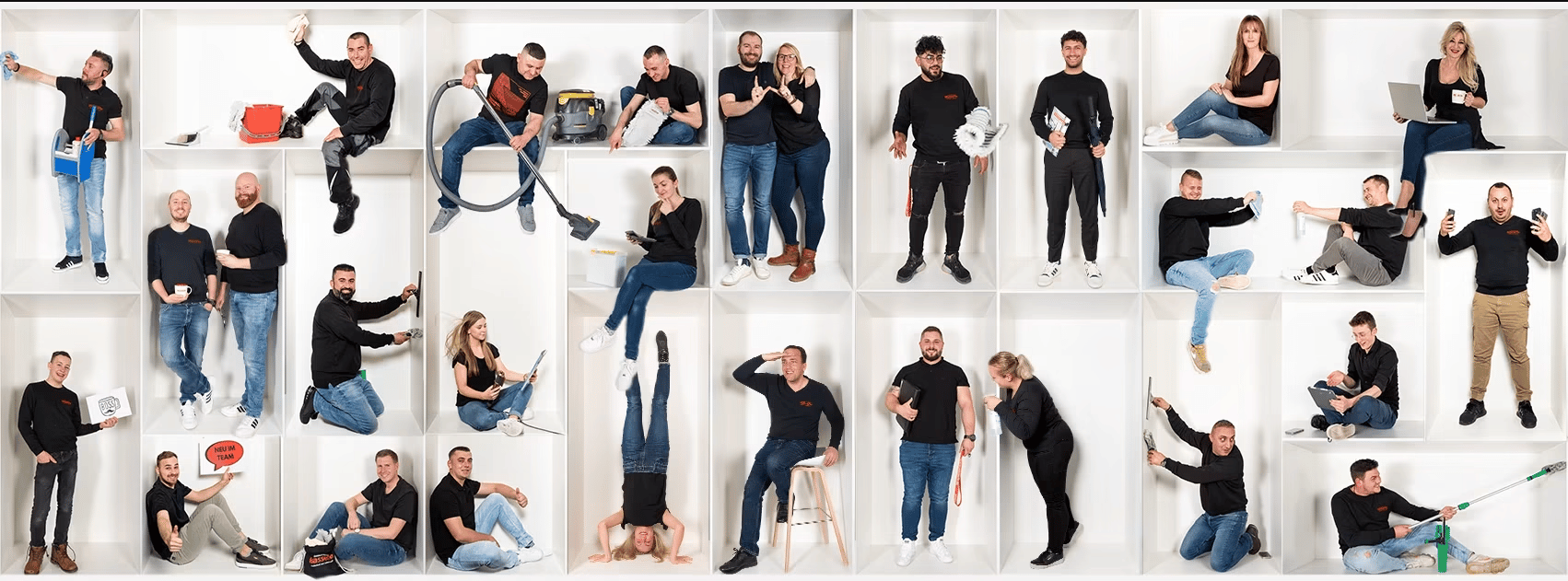
It isn’t only the founders who love Vespas. Of SIP’s 110 people, 35 ride, and some moved from the other end of Germany just to work there. That matters more than it sounds. You can’t go to university and study Vespa, so the real expertise lives in people who ride, break things and fix them. This June, ten of them rode sixty year old tuned Vespas to Rome for the brand’s eightieth anniversary and came home with broken cylinders and gearboxes. Those breakdowns became the next round of product fixes. When your team shares your customers’ passion, the product ideas come to you.
That expertise is also hard to replace, which is why Alex applies the same optimizing mindset to his people’s time. SIP has started using AI for first level email support, trained only on real answers their own experts have written. It means a rider in Japan can get good advice in the middle of the night. It also means the specialists spend less time answering the same question for the hundredth time, and more time on the conversations that need them. The person who used to write product descriptions all day now writes prompts. Nobody was worried, Alex says, because SIP is still hiring. For him the point was never fewer people. It was giving the people he has more time for the work they love.
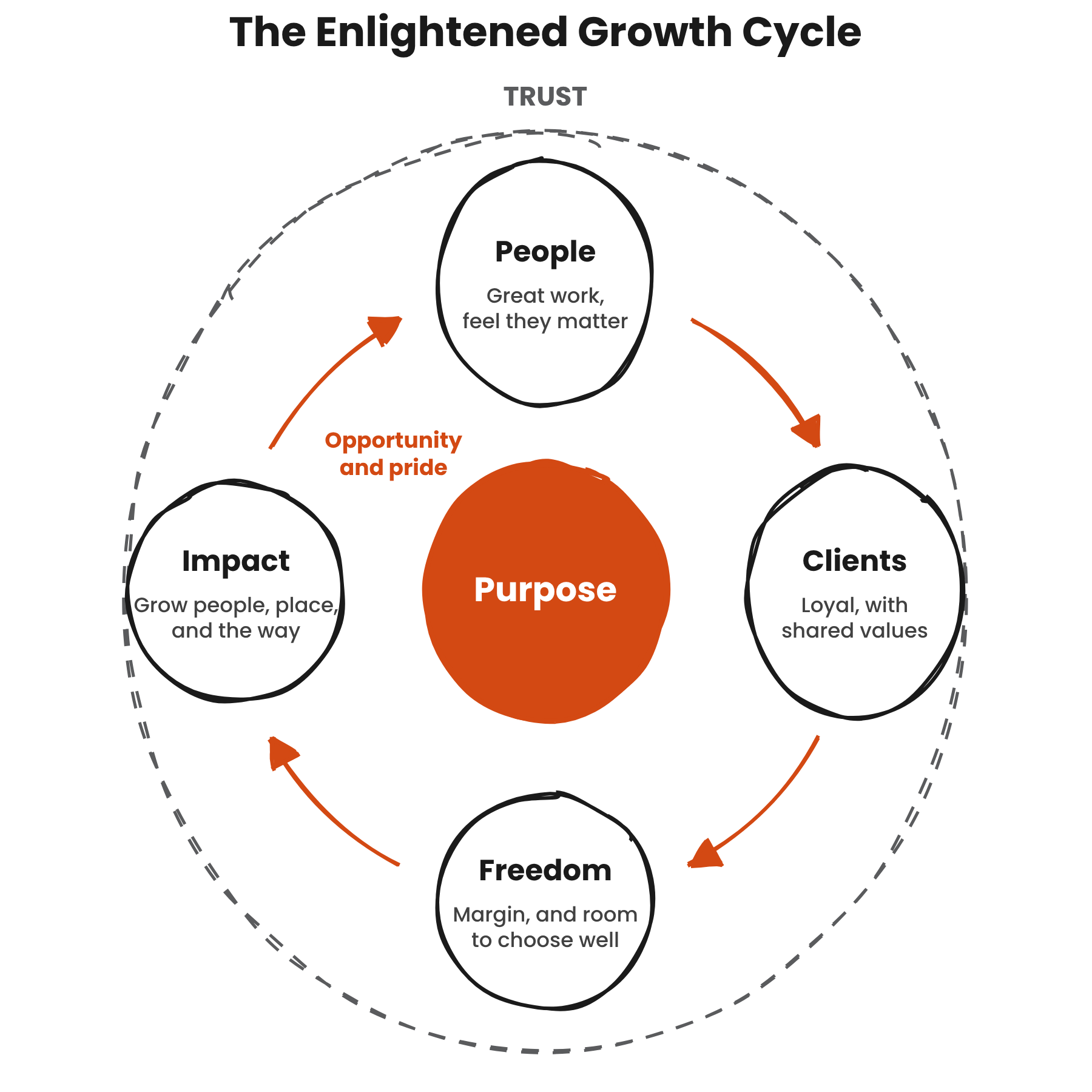
If you read my Three flywheels issue, you'll recognize this. Paul Spiegelman's Circle of Growth starts with your people. Look after them and they look after your customers. Loyal customers make a profitable business, and the profit goes back into the people.
SIP turns that wheel without ever thinking about it. The purpose is the passion two teenagers had for a slow scooter. They hire people who share it. Those people ride, break things and fix them, which makes the parts and the advice better. Customers trust them. And because nobody else owns the company, the money goes back in, as it has since 1994.
I don't want to make it sound easy, because Alex didn't.
At 53, he wonders aloud whether he and Ralf have become the limiting factor, and whether the company now needs more than two founders who learned everything on the job. And like almost every owner I talk to right now, he finds the people side getting harder. Expectations are shifting, the rules are tougher, and staying generous takes more work than it used to.
He’s not alone. On Saturday night I was back in Germany having dinner with another business owner. Several of her people are dealing with mental health challenges. Some are in the office half or three quarters of the time, and she has held one role open for close to three years. She wants to do right by them. She also has a business to run. Both are true at once.
I'm not sharing this to complain about people. Putting people at the center of the wheel means carrying the weight when it's hard, not just when it's easy, and nobody hands you a playbook for that. It's one of the reasons owners need each other... and this Community.
Nobody hands you a playbook for the people side. The Leadership Academy: nine months with leaders who are building companies like this one.
Everyone in our group left with a copy of CURVE, SIP's customer magazine.
Every few months, the best of their social content becomes a printed magazine in English and German. It's free, and it goes in the box with your next order. Maybe ten percent is about parts. The rest is stories: riders, clubs, trips. When the team went to Tuscany, every customer got a postcard from the trip.
A post lasts a day. A magazine sits on the coffee table for weeks, and because it rides along with an order, it costs almost nothing to deliver.
To steal it:
1. Pick a rhythm you can keep. Quarterly is plenty.
2. Pull the ten or twelve best stories from your LinkedIn, newsletter or social feed from that period. Customer stories beat product stories.
3. Put them in print, even if it's eight pages.
4. Send it with something you already send: an order, an invoice, a renewal, a thank you.
SIP robs and deploys too, by the way. The carousel that runs their warehouse was borrowed from Thomann, Europe's biggest music retailer. That's what this Community is all about... sharing what works.
The people side has been on my mind a lot lately. The more owners and CEOs I talk to, the more I hear the same thing: this is one of the hardest parts of running a company right now.
And it isn’t only small companies. This weekend I also spent time with people from multinational corporations. They're having similar challenges. In one instance, a person has been in and out of work with mental health struggles for around five years. They came back for a few days, went off again, and the clock started over. In Europe especially, owners are trying to do right by people inside rules that make that very hard.
So I’m wondering whether this belongs at the Small Giants Summit in 2027. Not a session on policies, but an honest conversation about how owners who care about their people handle it when it gets hard.
If you’d come to that session, just reply. And if you’re wrestling with something on the people side right now, tell me what it looks like. I read every one, and no names will ever leave my inbox.
See you next Monday,
Jean
Monday Mojo, one story a week from Jean's desk.